A vehicle wrap decision can go wrong before film touches paint: choosing coverage by looks alone. A full wrap and a partial wrap can both look sharp, but they solve different problems. Full coverage changes the whole vehicle’s identity. Partial coverage uses visible panels for contrast, accents or business branding.
For Triad drivers comparing car wraps NC, the choice depends on vehicle use, paint condition, design boldness and body lines. A good wrap should look intentional after installation and still make sense after highway driving, washing, sun and daily use.
Start with the result the wrap needs to deliver
A full wrap covers most painted exterior panels with vinyl film. It is usually chosen for a complete color change, a branded fleet vehicle, or a visual reset when the owner wants the whole vehicle to read as one finish. A partial wrap covers selected areas: doors, hood, roof, mirrors, rear quarters, tailgate, bed sides, rocker panels, or printed graphics.
At Atlantic Tint & Wraps, we’re a family-owned, full-service shop serving Jamestown, High Point, Greensboro, Winston-Salem and the NC Triad. Our installers help customers compare film type, finish, coverage and service fit before installation.
If you’re unsure how much coverage your vehicle needs, use contact our Jamestown shop to send photos and goals, or call 336-880-0498 so we can compare the vehicle and installation scope.
Full wraps make sense when the whole vehicle needs one message
Choose a full vehicle wrap when the factory color conflicts with the finish or brand you want. A full wrap helps when every side needs the same color, finish, logo system, or business identity instead of isolated panels.
Full coverage also gives more control over finish consistency. Gloss, satin, matte, metallic and printed films respond differently to curves, recesses and light. Carrying one material across doors, bumpers and trim breaks helps avoid a pieced-together look.
Paint condition still decides whether a full wrap is smart. Vinyl film performs best over stable, smooth paint. Peeling clear coat, rust, poor bodywork and uncured paint can show through film or create removal risk later. A wrap may hide a color you don’t like, but it won’t repair a weak surface.
Partial wraps work when visible panels can carry the design
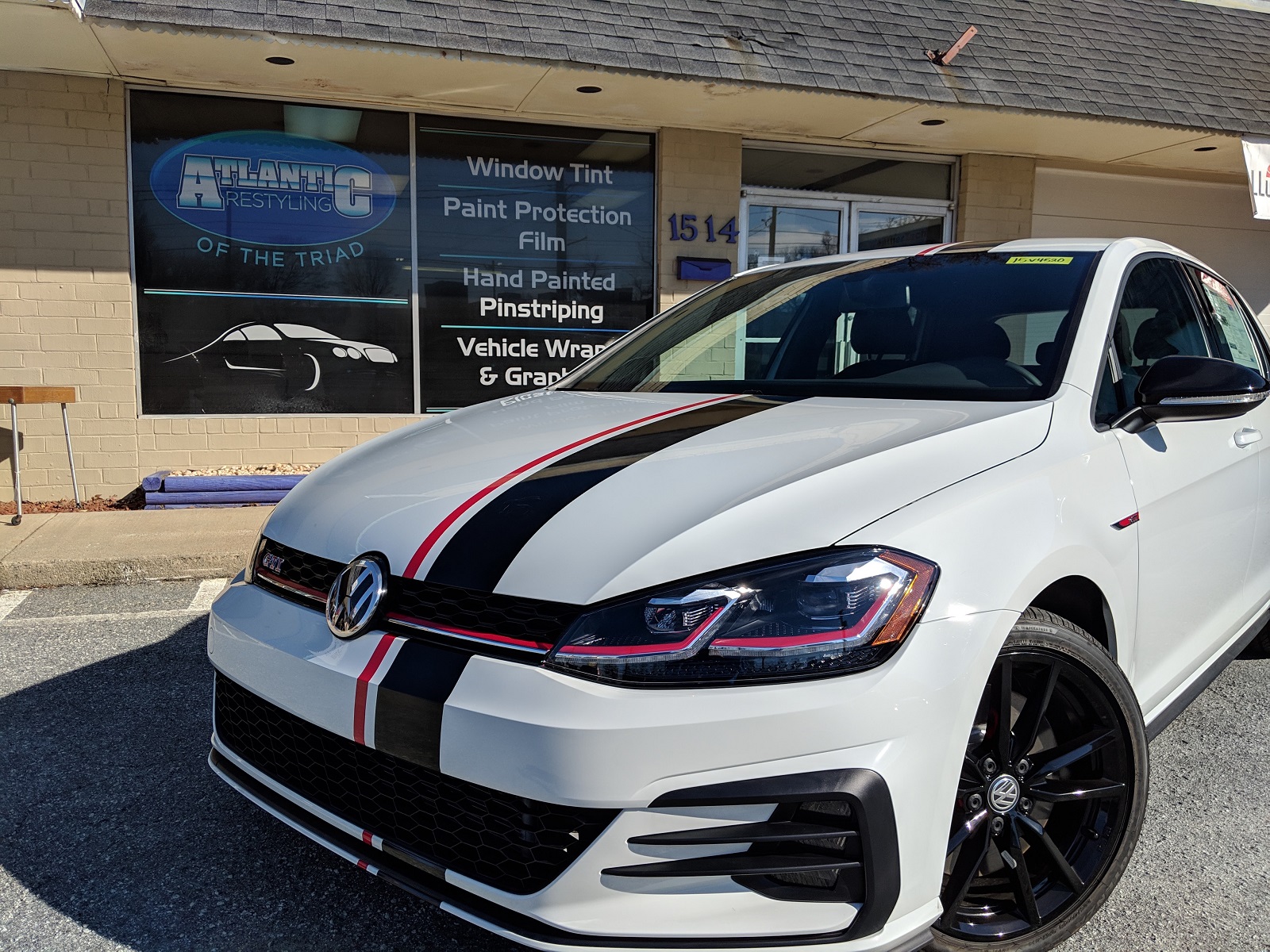
A partial vehicle wrap can be the cleaner choice when the factory color already supports the design. Black roof wrap on a white SUV, hood accents on a performance car, rear-quarter graphics on a work truck, and door-and-bed branding on a pickup can all look finished when the design uses natural panel breaks.
Partial coverage looks better when it treats the original paint as part of the design. A graphic that stops randomly in the middle of a curved panel can look unfinished. A graphic that follows a body line, wraps around the rear, or balances with window shapes can read like it belonged there from the start.
For vehicle wraps Greensboro NC and commercial vehicle wraps NC, partial coverage often works well because contact information, logos and services usually need to be read from the side or rear. It needs to be visible, readable and placed where people actually see the vehicle.
A quick way to compare coverage

Decision point | Full wrap | Partial wrap |
Best fit | Full color change, heavy branding, uniform finish | Accents, logos, roof or hood changes, targeted graphics |
Main risk | Weak paint affects more panels | Poor placement can look unfinished |
Paint need | Broad area of stable paint | Stable paint in covered areas |
Business use | Fleet identity | Readable local branding |
Quote factors | Vehicle size, film, coverage, disassembly, surface condition | Covered panels, print work, panel shape, edge layout |
A clear quote should explain what is being wrapped, the film or finish being considered, how the design meets panel edges, and what prep is needed. Ask our team to review photos before you choose coverage.
Wraps change appearance; they do not replace protection products
Vinyl wraps add a layer over the paint, so they can help with light surface wear in covered areas. Their main job is appearance or branding. If your biggest concern is rock chips on the bumper, hood, mirrors or fenders, paint protection film NC is the better service to discuss because PPF is made to take impact in high-hit areas.
Ceramic coating solves a different problem. A coating can help with gloss, easier washing and contamination resistance, but it is not armor against gravel or hard contact. View our ceramic coating NC service if your wrap plan also includes easier maintenance for paint, PPF or other suitable surfaces.
Ask these questions before you choose coverage
Before approving a wrap, look at the vehicle in daylight. Check paint stability, factory color, moving readability, logo file quality, high-wear areas and washing habits. If the front bumper or mirrors take constant road debris, PPF may belong in the plan. If the design only looks good from one side, adjust it before film is ordered.
At our shop at 214 Hillstone Drive in Jamestown, we use this kind of checklist to keep the decision practical. A flashy rendering can distract from a weak vehicle surface or a design that only works in a proof. Request a quote when you want full-wrap and partial-wrap options compared against the same vehicle.
FAQ
Is a full wrap better than a partial wrap?
Not automatically. A full wrap is better for a complete color change or a single vehicle-wide brand look. A partial wrap can make more sense when the factory paint already works with the design or when only high-visibility panels need graphics.
Can a partial wrap look professional on a business vehicle?
Yes, if the design uses the vehicle’s shape instead of fighting it. Door logos, rear-panel graphics, tailgate information and bed-side branding can look clean when they are sized for reading distance and aligned with body lines.
Will a wrap protect my paint?
A wrap can provide light surface coverage in wrapped areas, but it should not be chosen as a substitute for PPF. Paint condition, film age, installation quality, sun exposure, washing habits and removal method all affect long-term results.
If your main goal is a new color, a cleaner accent package or branded visibility for a business vehicle, start with our vehicle wrap service. We’ll help you compare full and partial coverage against your actual vehicle, then recommend the coverage that fits the surface, design and daily use.